
You've found a little bump on your gum. You've pressed it with your tongue about four hundred times and checked it in the bathroom mirror with your phone torch. Now you're trying to work out whether "gum boil" and "dental abscess" are two different things or one thing with two names. It's one of the most common questions I get asked in my surgery, and you're not the only one.
The short answer: a gum boil is nearly always a dental abscess that has found a way out. The abscess is the pocket of pus inside, at the tip of a tooth root or down the side of it. The boil is the spot on the gum where that pus drains to the surface. Two ends of the same problem, and both need a dentist to sort the tooth causing it. If you're near Harlow or Enfield, ring my emergency dentist team in Harlow or Enfield. Elsewhere, or out of hours, call NHS 111. And please don't squeeze it, for reasons I'll come to.
Call 999 or go to A&E, not a dentist, if:
- you're finding it hard to breathe, swallow or speak
- swelling is spreading towards your eye, down into your neck, or under your tongue in the floor of your mouth
- you can't open your mouth properly because of the swelling
- you have signs of sepsis. The NHS lists these as: breathing very fast; being confused, having slurred speech or not making sense; blue, pale or blotchy skin (on black or brown skin this may be easier to see on the palms of the hands or soles of the feet); a very high or very low temperature, feeling hot or cold to the touch, or being shivery; a rash that does not fade when you press it
Got a bump on your gum with pain, a bad taste or a swollen face? Call your nearest Minti practice and tell reception it's urgent. I keep same-day appointments for pain and swelling wherever I can.
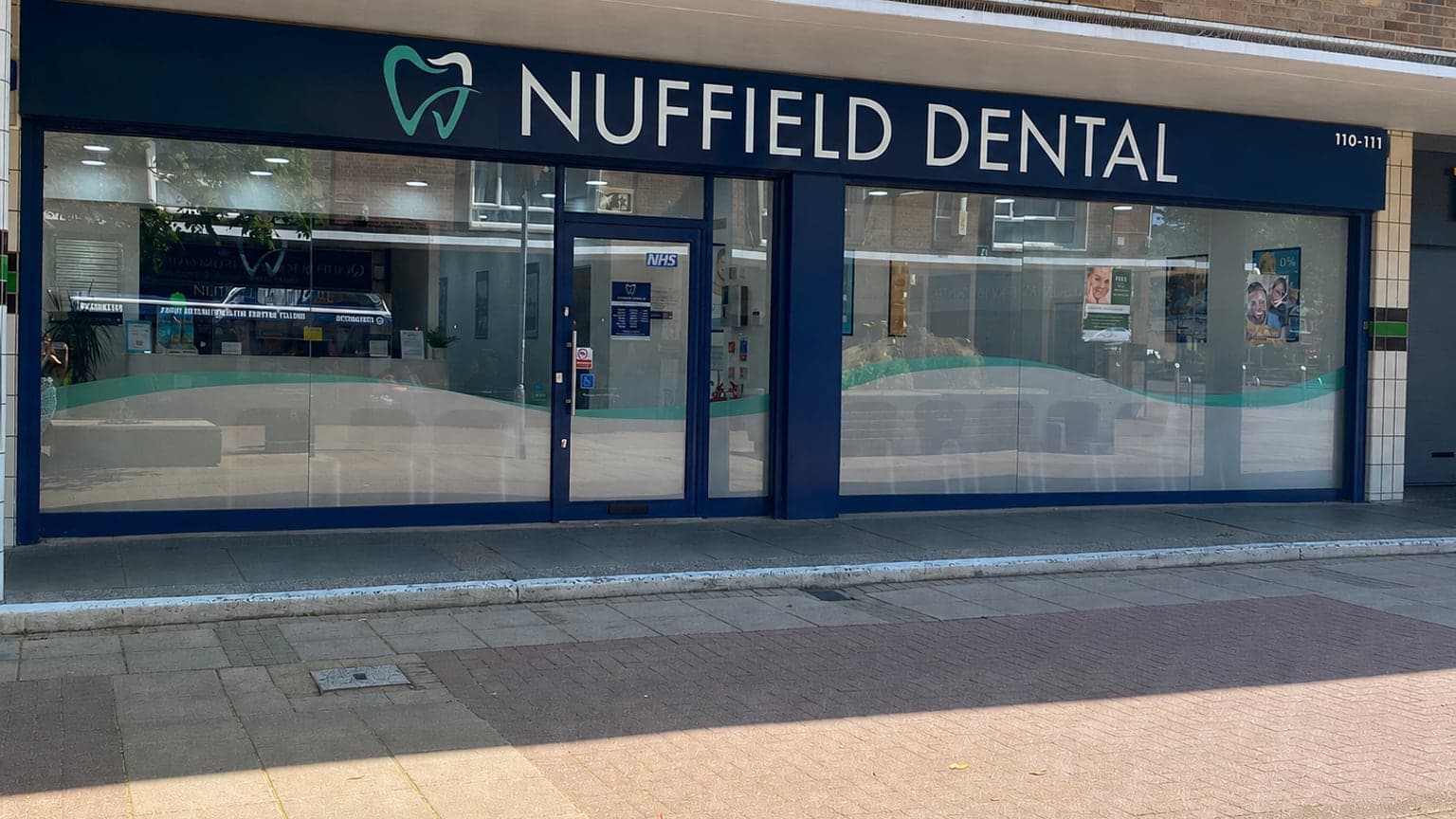
- Nuffield Dental Practice, Harlow: 01279 424 038
- Church Langley Dental, Harlow: 01279 306 690
- Enfield Smiles, Enfield: 020 8804 4320
Evening, weekend, or nowhere near us? Call NHS 111, not your GP; the NHS is clear a GP can't give you dental treatment.
What is a gum boil?
A gum boil is a small, soft lump on the gum near the root of one tooth. It might weep, and you may notice a salty or foul taste when it does. It can come up, burst, flatten, and come back a week or two later, which is the bit that fools people into thinking it has "gone".
The proper name is a parulis, or a sinus tract if you want to sound clever at dinner. What it actually is, nearly every time, is a drain. Pus from an infection deeper down has tunnelled to the surface. Think of it as the overflow pipe on the outside of a house: the pipe isn't the problem, it's telling you something inside is overflowing.
That's why a gum boil often doesn't hurt much. The pressure is escaping. Comfortable is not the same as fine, and I say this to everyone with one of these: the tooth underneath is still infected.
What is a dental abscess?
I'll keep this bit straight. A dental abscess is a pocket of pus from a bacterial infection in or around a tooth. Two main kinds:
- A tooth abscess (periapical) sits at the tip of the root. The nerve inside has died, usually from deep decay, a crack or an old injury, and bacteria have moved in.
- A gum abscess (periodontal) sits in the gum pocket down the side of a tooth, usually one with gum disease. The tooth is often still alive.
The NHS lists the symptoms as intense toothache or gum pain, redness, sensitivity to hot and cold, a bad taste, difficulty opening your mouth or chewing, swelling of the face or jaw, swollen neck glands, and a high temperature. You won't have all of them. Some people have hardly any.
Is a gum boil the same as an abscess?
Nearly always, yes, in the sense that one is caused by the other. The abscess is the infection. The gum boil is its way of draining. If you've got a boil, you've almost certainly got an abscess feeding it.
The one exception is a small abscess only in the gum itself, from something like a popcorn husk jammed under the gum edge. You can't tell that from the mirror, and neither can I without looking, so it gets treated as an abscess until proven otherwise.
The practical difference is this. A closed abscess with nowhere to drain tends to hurt a lot and swell. A draining one with a boil tends to hurt less. Same infection, different plumbing. The quiet one is not the safe one; it's just the quiet one.
Why does a gum boil come and go?
Because the drain works, then blocks, then works again. Pus builds up, the boil swells, bursts and empties, the pressure drops, the boil shrinks. Then the infection carries on producing pus, because nobody has dealt with the dead nerve or the gum pocket, and round it goes. Draining eases some of the pressure; the infection carries on underneath.
This is why I ask people not to burst or squeeze a gum boil at home. It's not a spot. It's the top end of a tunnel to an infected tooth, and I'd much rather drain it properly with the right kit and deal with what's feeding it.
How will I tell which one it is?
Quickly, usually. The first thing I ask is which tooth you think it is and whether it's had a big filling or a knock in the past. Then:
- A cold test. A tooth with a dead nerve doesn't feel the cold. A gum abscess usually sits next to a tooth that still does.
- A tap and a pocket check. A tooth abscess is often tender to tap. A gum abscess usually comes with a deep pocket down the side.
- An X-ray. A tooth abscess typically shows a dark shadow at the root tip. Sometimes I'll pop a soft point into the boil first so the X-ray shows which root it leads to.
The fix depends on the source: root canal treatment or removing the tooth for a dead nerve, or cleaning out the pocket for a gum abscess. Antibiotics on their own don't clear an abscess, because the pus needs a way out and the cause needs removing. I only prescribe them alongside that, where the infection is spreading or making you unwell.
When should you see a dentist about a gum boil or abscess?
Now, or as near to now as you can manage, whichever name you've settled on. The NHS advice for a suspected dental abscess is to see a dentist as soon as possible, and it won't clear up on its own. Ibuprofen or paracetamol can take the edge off while you wait, taken as the packet says. Soft food, a soft brush, and skip very hot or very cold drinks.
Call us today if:
- there's a bump on your gum that weeps, tastes bad, or keeps coming back
- a tooth is throbbing, tender to bite on, or has kept you awake
- your face or jaw is swollen, or your neck glands are up
- you feel feverish or generally unwell with it
Reminder: trouble breathing, swallowing or speaking, swelling heading for your eye, neck or under your tongue, a mouth you can't open, or any of the NHS sepsis signs at the top of this page is 999 or A&E, not a dentist.
If you're near Harlow or Enfield, I'd much rather take a look and find the tooth behind that bump than have you watch it come and go for another month. Ring your nearest Minti practice; if it's painful or swollen say it's urgent and we'll do our best to see you the same day. Anywhere else, or out of hours, call NHS 111.
This article is general information, not a diagnosis. A gum boil or abscess needs examining in person to find the cause.