
You've been told you need a filling. Since then you've read three forums, watched half a video you instantly regretted, and replayed a memory from 1998 involving a drill and a very long afternoon. Now you're here, typing "do fillings hurt" with one eye closed. It's one of the most common things I hear in my surgery, and you're in very good company.
The short answer: a filling shouldn't hurt. The tooth is numbed first with a local anaesthetic, so what most people feel is a quick sting from the injection, then pressure, vibration and noise, but not pain. Afterwards the tooth can be a bit sensitive or the gum a little sore for a week or two, and that usually settles by itself. Fillings are an everyday part of my work: I spot what needs doing at your dental check-up and we plan it together. If the tooth is already throbbing, keeping you awake or the gum is swollen, that's a job for my emergency dentist team in Harlow or Enfield, or NHS 111 if we're closed. For the full picture on types, costs and lifespan, see my tooth fillings guide.
Nervous about a filling, or the tooth is already hurting? Call your nearest Minti practice and tell reception how you feel. It helps us plan. I keep same-day appointments for pain and swelling wherever I can.
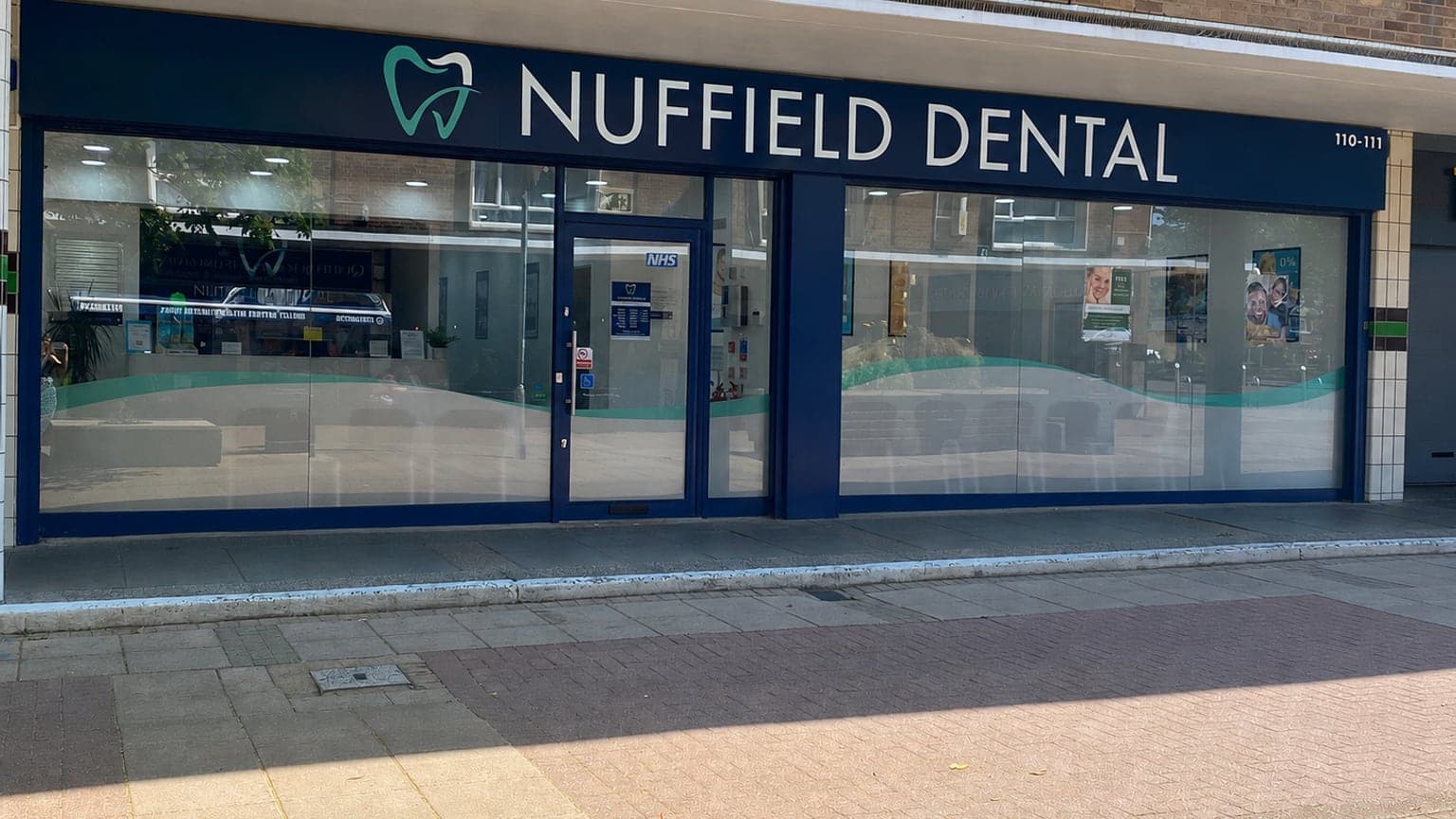
- Nuffield Dental Practice, Harlow: 01279 424 038
- Church Langley Dental, Harlow: 01279 306 690
- Enfield Smiles, Enfield: 020 8804 4320
Evening, weekend, or nowhere near us? Call NHS 111. If you're struggling to breathe or swallow, or swelling is spreading to your eye or neck, that's 999 or A&E.
Does the injection for a filling hurt?
This is the bit most people are really asking about, so let's start here. The injection is usually a brief sting or pinch, and then it's done. Numbing gel can be rubbed on the gum first so you feel less of the needle, and the NHS describes modern dental injections as designed to cause little to no pain.
Here's my rule: I tell you before I do anything, I go slowly, and you've got a stop signal. Agree a hand signal with me before I start and I'll stop when you use it. It sounds small, but knowing you can press pause changes how the whole appointment feels.
After a few minutes, the tooth, gum and often your lip or cheek on that side go numb. Your lip will feel roughly the size of a sofa cushion. It isn't.
What does a filling feel like once you're numb?
Once the anaesthetic has worked, you shouldn't feel pain. What you will feel is everything else:
- Pressure. Numbing blocks pain signals, not touch. So you'll feel me pressing and working, a bit like someone knocking on a door you can't open.
- Vibration and noise. The drill is loud and buzzy, and because it's right next to your jawbone it sounds louder to you than it is. Headphones and music help a lot of people.
- Water and suction. There's a spray to keep the tooth cool and a little suction tube that slurps it away.
- A blue light, for white fillings. The white material is set hard with a special light, a few seconds at a time. That part is completely painless and slightly sci-fi.
- A bite check. At the end I'll ask you to bite on thin coloured paper to make sure the filling isn't sitting too high.
If you feel a sharp twinge at any point, tell me. It usually means that bit of the tooth needs a touch more anaesthetic, and topping it up is routine. You're not being a wimp, and I'd much rather know.
Can you have a filling without an injection?
Sometimes. A very small, shallow filling that doesn't go deep into the tooth may be comfortable without numbing, and some people prefer to skip the injection. It's a conversation I have with you in the chair, tooth by tooth, not a rule. If there's any doubt, I'd rather numb it. You can't un-feel a twinge.
If fear is what's stopping you getting the filling done at all, please tell us. There are ways to help, from simply going slower to sedation for people with a severe fear, and the NHS says the first step is talking to your dentist about how you feel. Whether sedation is right for you, and where it's done, is something I'd talk through with you in person.
Will it hurt after the filling?
A bit of after-feeling is normal. The numbness usually lasts a few hours. While it wears off, the tooth and gum can feel tender, and for a week or two the tooth may be a little sensitive to cold, hot or pressure. An NHS community dental service says sensitivity after a filling normally settles within a few weeks, and to get back in touch if it hasn't eased within four weeks.
Deeper fillings, close to the nerve, are more likely to grumble for a while. The tooth has had a bit of a day.
Some things aren't just "settling", though. My fillings guide covers these patterns:
- Pain every time you bite, especially if your bite feels different: often a filling that's a touch too high. I've done it myself, and every honest dentist has. It's a quick fix.
- Strong, throbbing pain hours later: see bad tooth pain hours after a filling.
- Cold still zinging weeks later: see still sensitive to cold after a filling.
- Still aching weeks on: see tooth still hurts weeks after a filling.
- A filling that was fine and has started hurting months later: see why does my filling hurt months later.
For eating and drinking while you're numb, I've covered how long after a filling you can eat and when you can have tea, coffee or alcohol. And if you're wondering how long you'll be in the chair, that's in how long does a filling take.
Does putting a filling off make it hurt more?
Usually, yes, and I'll keep this bit straight. A small hole is a small filling: less drilling, less time, often a simpler appointment. Decay doesn't stay still while you wait. As it gets closer to the nerve, the filling gets bigger, the tooth is more likely to be sensitive afterwards, and if the nerve becomes inflamed or infected you may be looking at root canal treatment or losing the tooth instead.
So the kindest thing you can do for future you is book the small filling now. I say this to everyone: the filling you have early is almost always the easiest one you'll ever have.
When should you call a dentist?
If you've been told you need a filling and nothing hurts yet, book it in the normal way. Ring us, tell reception if you're nervous, and we'll allow time. The NHS says toothache that lasts more than two days needs a dentist, so don't sit on pain hoping it goes.
Call us today if:
- the tooth throbs on its own, keeps you awake, or painkillers aren't helping
- pain lingers long after something hot or cold
- the gum near the tooth is swollen, or there's a bad taste
- a filling has come out or the tooth has broken
Call 999 or go to A&E, not a dentist, if:
- you're finding it hard to breathe, swallow or speak
- swelling is spreading towards your eye or down into your neck
- you can't open your mouth properly because of swelling
Until you're seen, the NHS advice for toothache is paracetamol or ibuprofen if you can take them (no aspirin for under-16s), and avoiding very hot, cold or sweet food on that side.
If you're near Harlow or Enfield, I'd much rather take a look and walk you through exactly what your filling will involve than have you lose another week dreading it. Ring your nearest Minti practice. If it's already hurting, say it's urgent and we'll do our best to see you the same day. Anywhere else, or out of hours, call NHS 111.
This article is general information, not a diagnosis. Tooth pain needs examining in person to find the cause.